| |
|
|
|
| |
|
The following are projects that
LEAP is engaged in with its
partners. These projects
relate
directly to our five areas of
strategic focus (as outlined in our
Vision and Strategy)
|
|
| |
|
|
|
October 31st, 2009, was a historic day for the environmental movement in Sabah, as LEAP joined forces with four other prominent local NGOs to form a coalition named ‘Sabah Unite to Re-Power the Future’ or Green SURF, to oppose dirty energy such as coal-fired power plants.
This historic event took place on Tanjung Aru beach in Kota Kinabalu, a place close to the heart of many Sabahans and symbolic of the vulnerability of the coastline to global warming and sea level rise.
READ MORE… |
|
| |
 |
Malua Wildlife Habitat Conservation Bank |
|
|
|
Malua is home to 650 orang utans and is connected to Ulu Segama and the larger population of 2,650 there and also has all of Sabah’s mega fauna species. LEAP helped initiate this project by bridging between the state of Sabah and New Forests. Spanning an area of 34,000 ha and a period of 50 years, and pioneering voluntary biodiversity credit efforts globally, it is a model which promotes the partnership between industry and conservation and the Biodiversity Credit Certificates (BCC) are now on the global market.
READ MORE… |
|
| |
 |
Payment for Ecosystem Services (PES) pilot projects |
|
|
|
LEAP is now in preliminary stages of project development with three potential PES projects in collaboration with the Sabah Forestry Department, the Sabah Wildlife Department and Arborcarb International. These are in the Ulu Segama and Deramakot Forest Reserves and the Lower Kinabatangan Wildlife Sanctuary -- all critical habitat areas for viable wildlife populations. The aim is to seek new streams of revenue generation for these forest resources, while restoring and reconnecting vital tracts of forests.
READ MORE… |
|
| |
|
|
One of the biggest threats to the continued survival of orang utans, elephants, sun bears and other wildlife in Borneo is the increasing fragmentation of remaining forest habitat for conversion to oil palm and other agricultural uses. This fragmentation leads to increased isolation of individuals and groups, and reduced access to food and mates. This can impact the long-term viability and survival of entire species.
READ MORE… |
|
| |
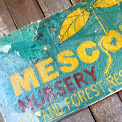 |
MESCOT
Model for Environmentally Sustainable Community Tourism |
|
|
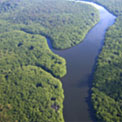
MESCOT is a community-based conservation and ecotourism initiative established in 1997 in the Lower Kinabatangan River region of Sabah, Malaysian Borneo. This region and its lowland rainforests are recognized as critical for conservation of biodiversity in Sabah. Sadly, due to over-logging, land conversion to palm oil, deforestation and forest fires, this area has been severely degraded and fragmented and the wildlife is in danger.
READ MORE…
|
|
| |
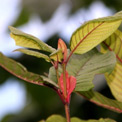 |
MESCOT
Forest Restoration Project |
|
|
MESCOT’s Forest Restoration Project aims to restore degraded and fragmented habitat areas of the Supu Forest Reserve, part of an important forested corridor along the Lower Kinabatangan River that has been heavily impacted by fires and uncontrolled logging in recent decades. This protected reserve surrounds the four villages of the Batu Puteh community, and supports numerous rare and threatened bird and mammal species, including the endangered orang-utan.
READ MORE… |
|
| |
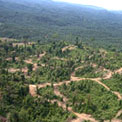 |
Orang Utan Habitat Restoration in Ulu Segama |
|
|
The specific objective of this 3-year project is to
restore 300 hectares of forest reserve land that
was previously degraded by illegal cultivation of
agricultural crops (mainly oil palm) to its historic
mixed species forest. With the receipt of
additional funding in 2008, as discussed below,
the original objective has been increased to the
restoration of 423 hectares of forest reserve
land. The forest restoration is focused on the
planting of mixed native tree species with the
ultimate aim of enhancing wildlife habitat and
food sources, especially for the orang utan. The
restoration area is strategically linked to critical
orang utan habitats within the Ulu Segama
Forest Reserve.
READ MORE…
|
|
| |
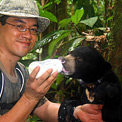 |
Bornean
Sun Bear Conservation Centre (BSBCC) |
|
|
The Bornean Sun Bear Conservation Centre is a joint project between Sabah Wildlife Department (SWD), Sabah Forestry Department (SFD) and LEAP to establish a sanctuary for captive sun bears, currently held in SWD facilities adjacent to Sepilok Orang Utan Rehabilitation Centre, at Sepilok, near Sandakan. The objectives of the project are to provide a holistic approach to Sun Bear conservation by providing improved facilities for the bears, promote public awareness, education, and research and wherever possible, rehabilitate bears back into the wild.
READ MORE…
|
|
 |
Kinabatangan Orang Utan Conservation Project (KOCP) |
|
|
Over the past ten years, the “Kinabatangan OrangUtan Conservation Project” (KOCP), a joint collaboration between the French NGO Hutan and the Sabah Wildlife Department, has embarked in the crucial challenge of securing the long-term survival of wild orang utans in the state of Sabah (Malaysian Borneo).
READ MORE… |
|
| |
 |
Borneo Rhino Alliance (BORA) |
|
|
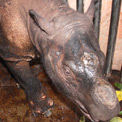
BORA is a local NGO based in Sabah. Active since the year 2000, and formerly known as SOS Rhino and subsequently SOS Rhino Borneo, BORA provides protection and monitoring of a critical population of Sumatran Rhinos in Tabin Wildlife Reserve in eastern Sabah. LEAP’s main contribution is to bridge new funding sources and build a local Sabahan/Malaysian base of funding partners.
READ MORE… |
|
| |
 |
MESCOT
Tungog Lake Restoration |
|
|
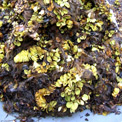
MESCOT’s Tungog Lake Restoration Project is a resounding success story for the Batu Puteh community. Completely disconnected from the Kinabatangan River, the Tungog lake is one of only three deep clear-water oxbow lakes within this floodplain, and is a natural sanctuary for more than 180 native freshwater fishes. The 18-hectare (45-acre) lake and surrounding forest also holds economic and cultural significance for the local indigenous people.
READ MORE…
|
|
| |
 |
MESCOT
Tungog Rainforest
Eco-Camp |
|
|
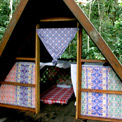
MESCOT’s Tungog Rainforest Eco-Camp (TREC) is an innovative community-based ecotourism project aiming to provide ecologically sustainable lodging within the Tungog Lake rainforest. Whereas most nature tourism activities in Sabah fail to consider the customs and welfare of local indigenous communities, TREC seeks to create a new, sustainable model of ecotourism that will: produce local jobs and generate income for the community; minimize disturbance of the forest; and provide long-term funding for habitat restoration.
READ MORE...
|
|
| |
 |
Project Women Empowerment Trees (PWET) |
|
|
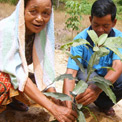
Project Women Empowerment Trees focuses on capacity building, skills training and community tree planting as means to empower local women and promote sustainable and economic use of their impoverished land. PWET aims to provide increased options, opportunities, and skills for the Pitas women by increasing access to livelihoods and enriching the local environment through habitat restoration.
READ MORE… |
|
|
|
|
 |
| |
|
| |
|
|
|
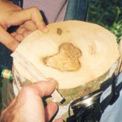
This 3-year project initiated and facilitated by LEAP has trained Malaysian scientists from three institutions in the patented technology of sustainable gaharu cultivation. Gaharu is a resinous substance produced as a defense to a fungal attack in Aquilaria trees, and fetches a high price as incense or oil, and over-exploitation has caused the tree to become almost extinct in the wild. The University of Minnesota, US, has developed a technology to replicate and enhance the natural process of resin development with 100% success rate, and teaches communities in SE Asia to develop sustainable cultivated Gaharu as a means of generating income.
READ MORE…
|
|
|
|
Untitled Document

|
|
|
|
visual3_a
Google AJAX Feed API - AJAX Slide Show Sample
|