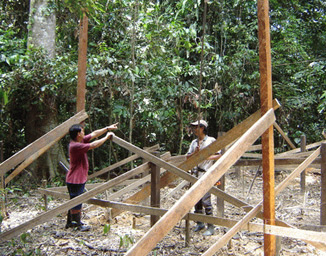
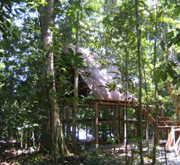
To meet these goals, the Eco-Camp was built entirely by skilled craftsmen from the local community, using indigenous techniques and local building materials, and relying on manual labor to minimize pollution and disturbance to the forest. The camp utilizes ecologically sustainable technologies including composting toilets and sealed reed beds for treating grey-water, capturing and recycling rainwater, gravity and solar powered water systems, and a zero chemical-use policy. Accommodations are simple open air tent platforms bolted together for easy removal with no concrete footings and no lasting footprint. TREC also has worked hard to keep all human noise from the operation of the camp to a level below the background sounds of the forest, thereby providing a true rainforest experience for guests and minimizing disturbance to wildlife – notably, they appear to have succeeded as orang-utans have visited the camp throughout the construction phase.
The camp will be staffed by community members, and visitor capacity is limited to 30. Visitors will eat local traditional foods from the forest with their indigenous hosts. Visitors also will be given the opportunity to make a contribution, physical or financial, towards the ongoing restoration of the lake and surrounding rainforest. In return, visitors will be able to observe the amazing wildlife and biodiversity of the rainforest, as well as get a taste for the habitat restoration work and how it is important for the orang-utan and other local wildlife. Tour revenues and donations will be funnelled directly back into the restoration projects.